Write engaging, inclusive and compliant job descriptions instantly. Widen your talent pool and meet current and upcoming regulations.
Surface top talent in seconds based on verified skills, not background or labels.
Automated protection for every decision. Ready for GDPR, Equality Acts, and the EU AI Act.
Ideal candidate is a native English speaker
COMPLIANCE RISK
Violates non-discrimination laws in multiple regions.
Job Created (J. Smith)
10:00 AM
Criteria Locked (System)
10:05 AM
Candidate Selected (M. Doe)
2:30 PM
Diversity Impact
+30%
Time Saved
-50%
Scale your hiring speed without breaking standards.
Defensible fairness for high-scrutiny environments.
Turn your hiring process into a liability shield.
Embed our safety engine into your product.
A complete, plug-and-play hiring portal powered by BlindStairs logic. No integration required.
Who we are, why we exist, and what we build.
News, media mentions, events, and awards.
Public-funded R&D: methodology, pillars, and validation.
Let’s talk: roles, collaborations, and partners.
Our mission: faster, scientific, defensible talent decisions. One engine, two deployment options: enterprise API integration or a ready-to-use platform.
Practical insights on fair hiring, compliance, and evaluation science.
Practical guidance: EU AI Act, pay transparency, GDPR, and equality laws.
A technical checklist for HR systems classified as “high-risk”.
Deep dives and guides on bias, transparency, regulation, and building defensible evaluations.
Research notes and product updates from the BlindStairs team.
In the hybrid era, combating visibility bias demands objective, transparent, data-driven evaluation and an inclusive culture—supported by ethical tools like Merified—to ensure fair, competency-based decisions from hiring through talent development.
Employer brands aren’t made by campaigns or glossy career pages but by the day-to-day hiring experience—speed, fairness, clarity, and consistency at every touchpoint. When operations run smoothly, drop-off falls, stronger shortlists surface faster, and explainable decisions with human review build trust while bias reduction widens the talent pool. Teams typically stumble when volume breaks consistency, tools are fragmented (ATS here, assessments there, spreadsheets everywhere), and “AI” is added without guardrails, hurting trust and compliance. The fix is practical, low-risk upgrades: assistive AI with clear human oversight, anonymized screening, and data-rich, auditable shortlists (EU AI Act-ready). If this resonates, turn speed, fairness, and explainability into your employer brand—book a short Merified demo to see it in action.
We would like to show how to cut time-to-hire without cutting corners: use assistive AI for JD drafts, resume summaries/dedupes, and first-pass rankings while people make the final calls; fix heavy forms, inconsistent screening, and scheduling ping-pong with self-scheduling to get interviews in 48–72 hours; keep AI steps explainable, track time-to-shortlist & scheduling latency, run fairness checks, and assign a named overseer with audit-ready logs. Merified by BlindStairs delivers blind screening, plain-English shortlists, and self-serve scheduling with a five-minute application—faster pipelines, same standards; book a demo to see it in action.
This blog post discusses the pitfalls of prioritizing 'cultural fit' over diversity in hiring processes, revealing how it stifles innovation and creativity within organizations. It highlights three costly mistakes: the echo chamber effect, the 'Mini-Me' syndrome, and the comfort zone penalty, which collectively hinder diverse thinking and innovative outcomes. Emphasizing a shift from 'cultural fit' to 'cultural add,' this post argues for hiring practices that value different perspectives and experiences. BlindStairs is presented as a solution with its AI assistant that helps eliminate biases, ensuring a more inclusive and productive hiring process.
This article emphasizes the effectiveness of A/B testing in refining job postings to attract more qualified candidates. By experimenting with variations in job titles, descriptions, employer branding, and salary details, recruiters can determine which elements resonate most with potential applicants. For instance, changing job titles or including company descriptions significantly boosts application rates. Additionally, the timing of the post and specific word choices also play critical roles in attracting applicants. The article concludes by highlighting BlindStairs' AI assistant, which simplifies these optimizations, allowing recruiters to enhance their recruitment process efficiently without manual testing.
Discover how the right words can make or break your job postings! Recent studies, including LinkedIn's Global Talent Trends 2024 and Harvard Business Review, reveal that phrases like "We're Like a Family Here" and "Fast-Paced Environment" might be turning away top talent. Learn why 82% of Gen Z view certain common terms as red flags and how specific language adjustments can boost your applications by up to 63%. Dive into our blog post to find out which phrases to avoid and the best alternatives to attract the best candidates. Transform your recruitment strategy with just a few tweaks to your job descriptions!
Unconscious bias in hiring has significant financial, legal, and reputational consequences for businesses, impacting productivity and increasing turnover costs. Biased recruitment limits access to diverse talent, which stifles innovation and company growth. Failing to address discriminatory practices also exposes companies to legal risks, as seen in recent AI-based hiring lawsuits. Additionally, a lack of diversity harms brand reputation, making it harder to attract top talent. Merified’s unbiased recruitment technology helps businesses mitigate these risks, ensuring fair hiring practices that promote diversity, inclusivity, and sustainable success.
Hair-based discrimination remains a challenge for Black women, despite legal protections like the CROWN Act. Black women often face professional barriers due to hair texture and Eurocentric beauty standards. Organizations can combat this by educating staff, reviewing appearance policies, and adopting objective hiring practices. BlindStairs' blind CVs help eliminate bias in recruitment.
Unconscious bias in recruitment often hinders workplace diversity, but blind recruitment can help. Inspired by the Boston Symphony's 1952 experiment, where blind auditions increased diversity, blind recruitment ensures hiring decisions are based on skills, not names or gender. BlindStairs offers an AI-driven platform that anonymizes CVs to eliminate bias, making it easier for companies to implement fair recruitment practices. This step fosters a more inclusive and equitable work environment.
AI's integration into hiring processes and the gig economy has exacerbated gender inequality, amplifying existing biases in job platforms and recruitment. Studies show that women, especially in STEM fields, face systemic barriers due to AI’s bias in job advertisements and selection tools. BlindStairs offers a solution with its blind resume technology, ensuring fair and equitable recruitment by eliminating bias and giving all candidates an equal opportunity.
BlindStairs was recently featured in ABC for its groundbreaking use of AI in transforming talent management. Our UnbiasAI system addresses key challenges in AI recruitment, such as privacy, data security, and bias, by anonymizing resumes and focusing on skills and experience. We prioritize maintaining the human element in recruitment while leveraging AI to ensure fairness and equity.
Ageism is a persistent issue in recruitment, with older workers often facing bias. A Stanford study highlighted ageism as a socially accepted form of prejudice. BlindStairs combats this by using bias-free tools that focus on skills and experience, ensuring fair and inclusive hiring processes for all candidates.
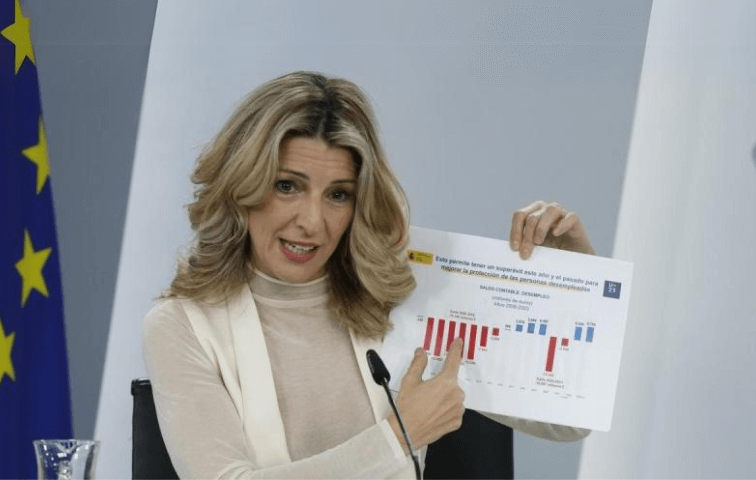
Yolanda Díaz endorsed ‘blind resumes’ in Spain to fight discrimination against workers over 45 and women. BlindStairs supports ethical, inclusive hiring practices, ensuring talent shines without bias.
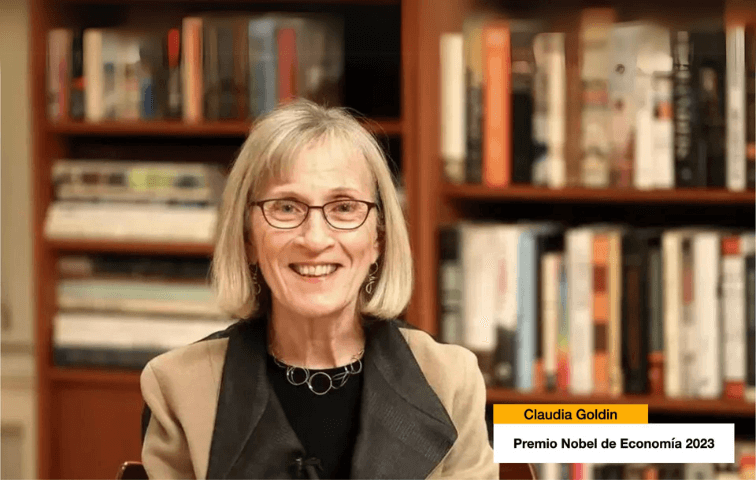
Claudia Goldin, Nobel Prize-winning economist, inspired BlindStairs' approach to eliminating bias in recruitment. Her research on blind auditions showed how removing identity reveals true talent. BlindStairs applies this concept with a blind resume system to ensure fair, skill-based hiring free from bias.